Published on
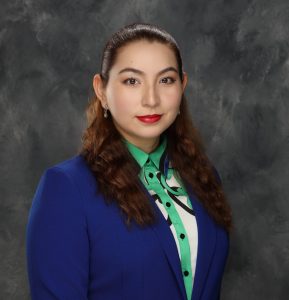
By: Tanner O’Neal Riley
The first time Mizzou Law 3L Jasmine De Los Rios learned what survival meant, she was a child standing in the aftermath of violence.
“When I was a minor, my biological father beat my mom so badly she ended up in the ER—she was nearly dead,” she said. “When the police arrived, they saw me… I had bruises all over my legs.”
For a brief stretch of time, there was quiet.
“He was gone for about a year… and during that time, we were able to breathe.”
But the quiet didn’t last—it rarely does in homes in which there is abuse. He came back and the cycle continued.
So Jasmine adapted.
“Every single time the abuse started, I would lock my sister in our closet,” she said. “Immediately. I’d give her a toy. I’d do something to protect her.”
She thought she was shielding her.
Years later, she would understand something more complicated: you can’t hide from trauma—but you can learn to survive it. And sometimes, survival becomes something else entirely.
Learning What Justice Looks Like
Jasmine didn’t have the language for justice as a child—but she saw it in action.
“I didn’t know it at the time,” she said, “but a prosecutor stepped in and helped us… saved my mom’s life.”
That moment stayed with her, even if she couldn’t yet name it.
Growing up in Phoenix, she saw other forms of injustice take shape—racial profiling, fear in everyday encounters, the unspoken yet ever-present understanding that systems in this country don’t work the same for everyone.
“I wanted to advocate for people,” she said. “I didn’t know exactly how—but I thought maybe if I’m an attorney, I’ll be able to raise my voice for others who can’t.”
That idea—simple, rough—became direction.
The Long Way Around
Jasmine’s path to the law was anything but traditional.
Still, she kept going.
She worked for a nonprofit after graduating from Arizona State University, helping victims of domestic violence and sexual assault navigate immigration processes—U visas, VAWA petitions, systems layered with stifling complexity against a backdrop of life-or-death urgency.
Then came the Army.
“I wanted legal experience,” she said. “I thought I could be a paralegal without being a soldier. I didn’t connect the dots,” she said, laughing.
The Army connected them for her.
Over four and a half years, she rose to the rank of sergeant—outpacing her peers at nearly every step of the way. The discipline she had developed as a childhood trauma response translated into structure, leadership, and empathy. Moreover, it shaped how she saw the law.
“I started seeing things differently,” she said. “It wasn’t just, ‘prosecutors are trying to get people.’ I started seeing how they can protect their communities.”
Case by case, her perspective shifted.
“There were people who were actually dangerous,” she said. “And we were able to protect our formations from them.”
The Army taught Jasmine that the law wasn’t always just reactive—it could be preventative. Protective. Powerful.
There’s a quiet persistence in her story—nothing too grand, certainly not boisterous or performative. It’s the kind built over years of figuring things out alone; translating for family; navigating systems without guidance.
“I took the scenic route,” she said.
But the route gave her something others don’t always have: perspective.
Where It Comes Together
At the University of Missouri School of Law, that perspective found structure inside the Child and Family Justice Clinic.
The clinic operates like a small law firm, representing survivors of domestic violence and child abuse—handling orders of protection, custody modifications, and guardianships. Students don’t just observe. They interview clients, draft motions, and stand in court.
“We’re here to support survivors in any way that we can,” said Danielle Dodd, Director of the Child and Family Justice Clinic. “Yes, we provide legal services—but we also act as a bridge. If there are barriers making their legal situation harder, we connect them to resources. We look at the whole person.”
That philosophy—human first, law second—was innate to Jasmine.
Dodd saw it immediately.
“Her background as a survivor really does show through her advocacy and what she’s willing to do for her clients,” Dodd said. “It impacts her work ethic.”
In a setting where mistakes carry real consequences, that level of care matters.
“These are real lives,” Dodd said. “The work we do—if we make a mistake—it could be life or death.”
Jasmine carries that weight well.
“Anytime she receives feedback, she incorporates it,” Dodd said. “The next time I see her work, I can tell she put that care into it.”
But it’s more than work ethic. It’s presence.
“I remember her first hearing,” Dodd said. “You could see the moment it clicked. She turned into the lawyer she’s been training to be.”
Jasmine remembers it differently.
“I asked if I did okay,” she said with a laugh.
She did more than okay. “She was excellent,” Dodd said.
A Voice That Carries
At Mizzou Law, Jasmine has taken on numerous leadership roles, mentoring others who may not see themselves reflected in the profession. She understands that isolation—that feeling of being “the only.”
“If there’s nobody that looks like you,” she said, “let that be you. Be the thing they say you can’t be.”
That mindset hasn’t gone unnoticed.
“Students like Jasmine remind me why this work matters,” Dodd said. “They’re the future. They’re going to take this work and carry it forward—and do even more with it. She represents what is best about this profession. Not just academic ability, but purpose. She understands the human side of the law because she has been on the human side of the law—and that’s what makes her, and many like her, special.”
Paul Litton, dean of Mizzou Law, said, “We are proud to be the kind of law school where students like Jasmine—those who are different, those who are special, those who have overcome—can come and be mentored, be taught, and excel. We are proud to be an institution where our students’ backgrounds are not ignored or shoved into a mold but built up and shaped into strengths that will one day benefit the legal community and the broader world,” he said.
“They are the future and they make all of us very proud.”
What Comes Next
Jasmine’s goals are clear—and rooted firmly in everything that brought her here.
“There’s change to be made,” she said. “Protections for women and children—we need stronger laws, stronger consequences.”
She’s not interested in standing on the sidelines. After graduating in the spring, Jasmine intends to begin working as a prosecutor, saving lives in the same way hers was saved.
“Somebody’s going to call the shots,” she said. “Why not me?”
Her story is one of strength and resilience – of defying the odds. Her mother escaped the abuse when Jasmine was ten and met a lovely man whom she and her sister now refer to lovingly as “dad.” Her sister, Clara, studied architecture at the Frank Lloyd Wright School of Architecture, works with an engineering firm, and is also currently working towards her Architecture license.
Despite it all, they made it. They did the thing everyone thought was impossible.
Jasmine De Los Rios is not the polished, predictable version of what people expect a future lawyer to look like.
She is something far more important.
Proof.
Proof that you can come from violence and still choose justice.
Proof that you can take the long way and still arrive exactly where you belong.
Proof that you don’t have to be perfect—you just have to refuse to stop.
De Los Rios says that 75 years from now, when her work is done, her hope is simple:
“I want people to know that I cared about my community,” she said. “That I raised my voice for those who couldn’t.”
That’s the legacy.
Survival.
Hope.
Endurance.
Faith.
Christ-like kindness.
Joy.
Servant leadership.
Justice.
That is Jasmine De Los Rios.