Category: Faculty News

Oct. 26, 2026
Professor Gamage’s article reviewed in Jotwell
Professor David Gamage’s recent article, “Expert Report On the California 2026 Billionaire Tax: Revenue, Economic, and Constitutional Analysis,” was identified as one of the best works of recent scholarship relating to tax law in a review recently published in Jotwell: The Journal of Things We Like (Lots). To read the full review of Professor Gamage’s article, click here.
Oct. 20, 2026
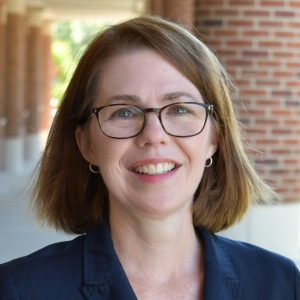
Professor Sperino publishes 11th edition of her employment discrimination book
Professor Sandra Sperino has published the eleventh edition of her “Federal Law of Employment Discrimination in a Nutshell.” Her book provides law and undergraduate students with a foundational understanding of this complex area of law while offering practitioners an up-to-date review of key legal principles and developments. The book focuses on the principal federal statutes governing workplace discrimination, including Title VII of the Civil Rights Act of 1964 (race, color, national origin, sex, and religious discrimination), the Age Discrimination in Employment Act, the Americans with Disabilities Act, and the Pregnant Workers Fairness Act. The book…
Oct. 15, 2026
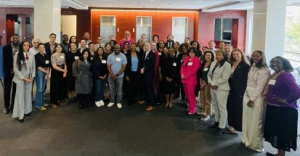
Professor Henson presents at AALS Forum
Professor Renee Henson recently presented her article, “The Algorithmic Playground and the Jurisprudence of Irresistibility,” at the AALS Education Law and Children’s Law Scholars’ Forum at Georgetown Law. Her article explores how the longstanding tort doctrine of attractive nuisance might inform the legal responsibilities of digital platforms, particularly whether its underlying principles support affirmative duties to protect children from foreseeable harms associated with platform design.
Oct. 14, 2026
Professor Gamage’s work on “billionaire wealth tax” discussed in The New Yorker, Sac Bee
The “Billionaire Wealth Tax” proposal on the California ballot this November was recently discussed extensively in articles in The New Yorker and the Sacramento Bee. The proposal was developed by Professor David Gamage and other co-authors. From The New Yorker: “Emmanuel Saez and Gabriel Zucman … and David Gamage, a former Berkeley law professor, began working with Senator Elizabeth Warren on a wealth-tax proposal for her 2020 Presidential campaign.”; “They helped draft a proposal from Joe Biden to tax the unrealized capital gains of the richest Americans and a similar proposal from Senator Ron Wyden, of Oregon.” …
Oct. 1, 2026
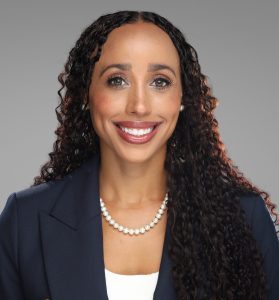
Professor Henson publishes symposium article on AI in legal education
Professor Renee Henson’s newest article, “My Negotiation Chatbot Toby and Pedagogical Governance,” has been published as part of a symposium issue of the Boston University Journal of Science & Technology Law. The article grew out of Professor Henson’s experience developing Toby, an AI negotiation chatbot that she uses with first-year law students. Toby plays the role of an obstinate opposing counsel, giving students an opportunity to practice negotiating against a difficult adversary in a controlled classroom setting. Using Toby as a case study, Professor Henson explores how instructors can meaningfully incorporate chatbots into legal education while protecting…
Sep. 11, 2026
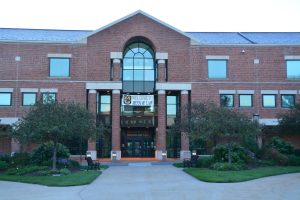
Mizzou Law faculty win annual awards
Each year, three faculty awards are given to Mizzou Law faculty members: One for a scholarly work, one for teaching, and one for the administration of justice. At the annual faculty and staff luncheon to begin the 2026-27 academic year, Mizzou Law Dean Paul Litton announced the winners of the 2026 Mizzou Law Faculty Awards, which were given to Professors Rachel Wechsler, Chelseá Mitchell, Thom Lambert and Sandra Sperino. Learn more about their awards below. Congratulations to these outstanding Mizzou Law faculty!
Sep. 10, 2026
Professor Boyack publishes new casebook
Professor Andrea Boyack has published a new casebook, Contemporary Property, 6th ed., which she co-authored with professors from Pepperdine University, University of Kansas and Marquette University. This is a substantially updated edition of the casebook, designed for required Property courses in law school. The book takes a contemporary and integrated approach to property law, while also incorporating practice-oriented exercises and skills development. Among other things, the new edition addresses current issues including affordable housing, homelessness, common-interest communities, water law, cryptocurrency and blockchain, intellectual property, and recent Supreme Court property decisions. It also includes complete coverage of the…
Sep. 9, 2026
Professor Woods quoted in article on Supreme Court rejection of Missouri election map
Professor Jayne Woods was quoted in an article by Straight Arrow News discussing the rejection by the US Supreme Court of Missouri’s bid to use the 2025 congressional election map in the November elections. “The old map is and always has been the law, unless and until the new House map is put to the voters and we approve or disapprove it,” Woods said. Read the full story here.
Sep. 1, 2026
Professor Gamage participates in Congressional briefing
Professor Gamage participated in a recent virtual Congressional Staff Briefing titled “The Case for a Wealth Tax.” Professor Gamage was a member of a four-person panel that discussed economic evidence of wealth concentration, its influence on politics, and revenue potential of serious wealth tax proposals.
Aug. 31, 2026
Professor Gouzoules quoted in New York Times
Professor Alexander Gouzoules was quoted in the New York Times over the weekend in an article about how the US Justice Department tends to address issues in court in a north Texas district. Read the full article here.