Category: Faculty News
Aug. 25, 2026
Associate Dean Lietzan named to Best Lawyers list
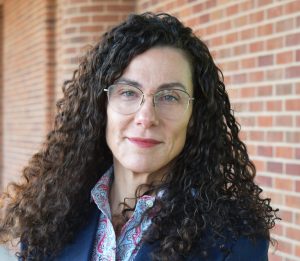
For the 12th straight year, Erika Lietzan, Associate Dean for Research and Faculty Development, William H. Pittman Professor of Law & Timothy J. Heinsz Professor of Law at Mizzou Law, was named a Best Lawyer in FDA Law
Aug. 21, 2026
Professor Gamm presents at ALPS Annual Meeting
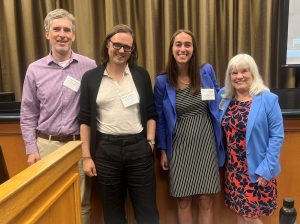
Professor Taylor Gamm presented her article, “Wildfire Takings,” at the Association for Law, Property & Society’s Annual Meeting in June in New Orleans. Professor Gamm’s article will published in a forthcoming issue of the Alabama Law Review.
Aug. 20, 2026
Professor Rhodes interviewed on NPR
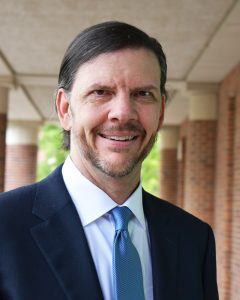
Professor Charles “Rocky” Rhodes was interviewed for the National Public Radio statewide program The Texas Standard regarding Minnesota’s lawsuit against Texas Governor Greg Abbott seeking to compel the extradition of former ICE agent Christian Castro to Minnesota to answer criminal charges for allegedly shooting a man through the front door of his home and then falsely reporting the man attacked him. During the interview, Rhodes explained the U.S. Constitution’s Extradition Clause, its imposition of a ministerial duty on governors to extradite those fleeing criminal charges in another state, its application to Minnesota’s extradition request, the immateriality…
Aug. 7, 2026
Professor Sperino quoted in Law360
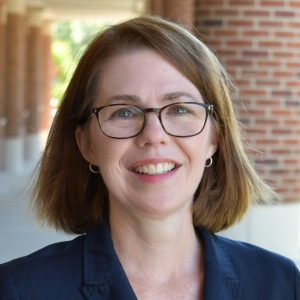
Professor Sandra Sperino was quoted in a Law360 article on circuit courts’ use of bias tests. Read the full article here.
July 31, 2026
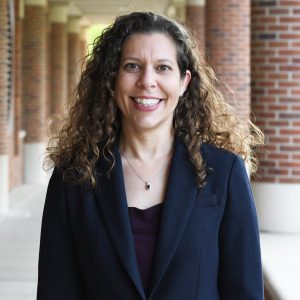
Professor Woods presents at DWI conference
Professor Jayne Woods gave the plenary CLE presentation, “Who’s in the Driver’s Seat: AI and Ethics in DWI Practice,” at the 2026 Bernard Edelmen DWI Science and Law Conference put on by the Missouri Bar.
July 31, 2026
Professor Sperino quoted in Bloomberg Law
Professor Sandra Sperino was recently quoted in a Bloomberg Law story regarding caps on how much money workers can actually recover when juries award them significant damages in employment discrimination cases. “Jurors considering Title VII cases aren’t told about the caps beforehand. So we end up with this sort of odd scenario where the jury is actually assigning damages and then, unbeknownst to the jury, after the verdict is rendered, then the judge is reducing the damages. Some remedies, such as back pay, aren’t subject to the caps. Those can be a large part of the recovery for…
July 30, 2026
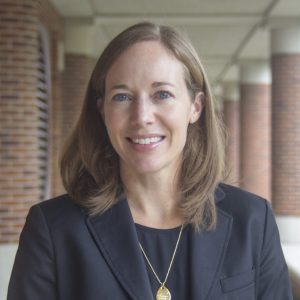
Mizzou law professor offers new solution to strengthen the childcare workforce
A University of Missouri School of Law professor is reframing the national conversation about childcare, encouraging policymakers to invest in those who make the industry possible. In a new study, Lauren Shores Pelikan proposes directing tax benefits to childcare workers as a way to attract and retain the workforce needed to expand access to care. “My proposal is to shift some tax incentives to the provider side — not just to childcare businesses, but directly to childcare workers themselves,” Shores Pelikan said. “The goal is to get resources into the hands of the people providing care…
July 27, 2026
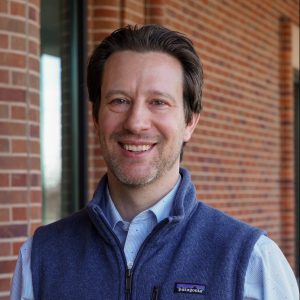
Professor Gamage quoted in KOMU story on Missouri income tax
Professor David Gamage was interviewed in a recent KOMU-TV story regarding the Missouri state income tax and the constitutional amendment on the upcoming ballot to remove it. “All of them [other states] have other ways of generating large revenues that Missouri is not currently contemplating. There are states that have large natural resource revenues: Alaska, Wyoming, to some extent Texas. There are states that have large tourism revenues, Nevada and Florida.” See the full story here.
July 24, 2026
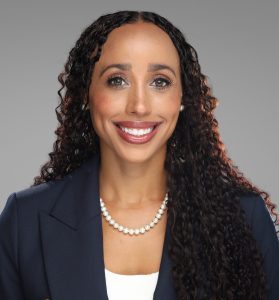
Professor Henson presents at Energy, AI, and Space workshop
Professor Renee Henson recently presented her work-in-progress paper, “The Algorithmic Playground and the Jurisprudence of Irresistibility,” at the Columbia, Northwestern, and Vanderbilt Virtual Workshop on Energy, AI, and Space.
July 24, 2026
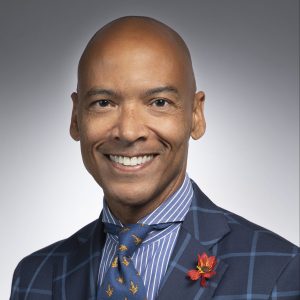
Professor Henson appears on Rule of Law podcast
Professor Chuck Henson recently appeared on the Rule of Law: The Academy Speaks podcast in an episode on how implicit bias affects judgment, credibility, decision-making, hiring, mentoring, leadership and the legal profession as a whole. You can listen to the podcast here.