News Archive

October 15, 2026
Mizzou Tax Law Colloquium hosts Toronto Law professor
On Oct. 21, Robin Morgan (Toronto Law) will present “Substance Over Form as a Doctrine of Legal Characterization.” The Mizzou Law Tax Policy Colloquium is convened by Professor David Gamage of Mizzou Law. Most sessions will be open to guest participants via zoom, from 2:00 to 3:15 pm Central… Read More
October 15, 2026
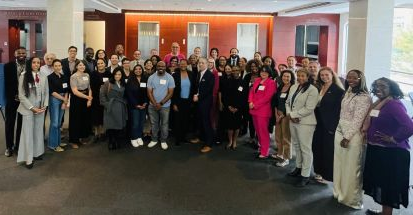
Professor Henson presents at AALS Forum
Recent News
Oct. 9, 2026
Mizzou Tax Law Colloquium hosts Minnesota law professor
On Oct. 14, Vinita Singh (Minnesota Law) will present “Weaponization of Taxation: Sovereign Tax Immunity as a National Security Tool” The Mizzou Law Tax Policy Colloquium is convened by Professor David Gamage of Mizzou Law. Most sessions will be open to guest participants via zoom, from 2:00 to 3:15 pm Central Time. This session will be open to guest participants via zoom. Anyone who would like to join as a guest participant should e-mail Professor Gamage directly at dgamage@missouri.edu for details, the zoom login, and to be sent the draft paper. Anyone who would like…
Oct. 5, 2026
First-time Missouri Bar takers pass at high rate
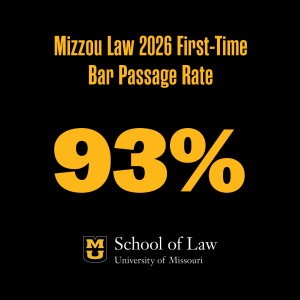
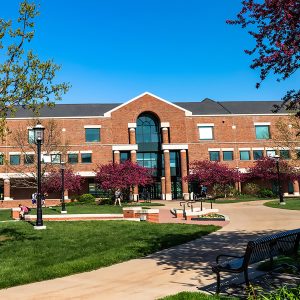
Mizzou Law graduates who were first-time takers of the 2026 July Missouri Bar Exam passed at a 93% rate, eight percentage points higher than the overall passage rate for all first-time takers. Additionally, 90% of all Mizzou Law graduates who took the exam in July passed.
Oct. 2, 2026
Mizzou Law Tax Colloquium hosts Wash U and Northwestern
On Oct. 7, Conor Clarke (Wash U Law) will present “The Indirect Taxes” (with Ari Glogower, Northwestern Law). The Mizzou Law Tax Policy Colloquium is convened by Professor David Gamage of Mizzou Law. Most sessions will be open to guest participants via zoom, from 2:00 to 3:15 pm Central Time. This session will a live presentation and will be open only to guest participants who are able to join us in the Mizzou Law building. Anyone who would like to join as a guest participant should e-mail Professor Gamage directly at dgamage@missouri.edu for details.
Oct. 1, 2026
Professor Henson publishes symposium article on AI in legal education
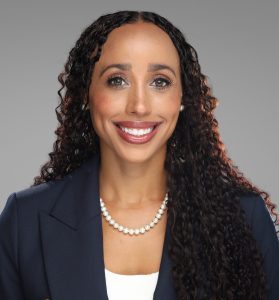
Professor Renee Henson’s newest article, “My Negotiation Chatbot Toby and Pedagogical Governance,” has been published as part of a symposium issue of the Boston University Journal of Science & Technology Law. The article grew out of Professor Henson’s experience developing Toby, an AI negotiation chatbot that she uses with first-year law students. Toby plays the role of an obstinate opposing counsel, giving students an opportunity to practice negotiating against a difficult adversary in a controlled classroom setting. Using Toby as a case study, Professor Henson explores how instructors can meaningfully incorporate chatbots into legal education while protecting…
Sep. 29, 2026
Thompson Coburn Scholarship Puts New Focus on Leadership at Mizzou Law
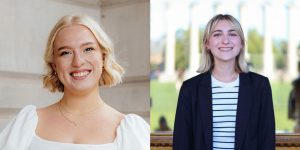
A scholarship that has supported University of Missouri School of Law students for more than 30 years is getting a new focus. The former Coburn & Croft Scholarship Fund has been renamed the LSF Thompson Coburn Leadership Scholarship, reflecting the law firm’s evolution and placing a greater emphasis on leadership among Mizzou Law students. The scholarship was established in 1992 and under the renewed partnership between Thompson Coburn and Mizzou Law, preference will be given to incoming 1L students who demonstrate outstanding leadership and exemplary academic achievement. For students, the scholarship provides more than financial assistance.
Sep. 24, 2026
Mizzou Law Tax Colloquium hosts Washington University and Wisconsin professors
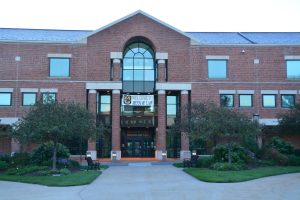
On Sept. 30, Jonathan Choi (Wash U Law) will present (with Paul Connell, Wisconsin Law), “AI Deceleration (or Acceleration) by Taxation” The Mizzou Law Tax Policy Colloquium is convened by Professor David Gamage of Mizzou Law. Most sessions will be open to guest participants via zoom, from 2:00 to 3:15 pm Central Time. This session will be open to guest participants via zoom. Anyone who would like to join as a guest participant should e-mail Professor Gamage directly at dgamage@missouri.edu for details, the zoom login, and to be sent the draft paper. Anyone who would…
Sep. 18, 2026
Mizzou Tax Colloquium hosts Cardozo and NYU professors
On Sept. 23, Luís C. Calderón Gómez (Cardozo Law) and Mitchell Kane (NYU Law) will present “Pigou Goes Abroad.” The Mizzou Law Tax Policy Colloquium is convened by Professor David Gamage of Mizzou Law. Most sessions will be open to guest participants via zoom, from 2:00 to 3:15 pm Central Time. This session will be open to guest participants via zoom. Anyone who would like to join as a guest participant should e-mail Professor Gamage directly at dgamage@missouri.edu for details, the zoom login, and to be sent the draft paper. Anyone who would like to…