Published on
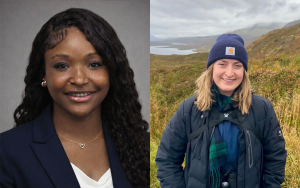
Two Mizzou Law students have been awarded Trans World Airline (TWA) scholarships for the 2026-2027 school year. TWA scholarships fund undergraduate and graduate students who perform or plan to perform research addressing environmental issues. Scholarships are awarded annually to students based on their academic accomplishments and research interests.
Mero Libimbi, a rising 2L at Mizzou Law, received the scholarship to help fund her research examining how environmental and social conditions contribute to health disparities among Black women, with a focus on chronic illness and maternal health outcomes. Mero is particularly interested in understanding how these disparities are shaped by broader systems, including housing patterns, access to healthy food, and unequal access to quality healthcare.
Mero’s project will begin with a general exploration of the social determinants of health, focusing on how environments influence physical and mental well-being. From there, she plans to examine patterns in how environmental risks and resource access differ across communities. She is especially interested in how certain neighborhoods lack resources that support good health, such as grocery stores, safe spaces, and consistent medical care, while also exposing residents to higher levels of stress.
McKenna Thompson is also a rising 2L. Her scholarship will fund her comparative legal research in partnership with the University of the Highlands and Islands Centre for Mountain Studies and the Community Landownership Academic Network in Perth, Scotland. The project builds on McKenna’s earlier TWA-supported land conservation research during graduate school, and the TWA Scholarship will allow her to continue her work in land stewardship through law school.
McKenna’s project examines how Scotland and the United States use different legal tools to address community interests in land, such as affordable housing, conservation, rural development, public access, and long-term local stewardship. In Scotland, these interests are often addressed directly through land reform laws and legal duties connected to land ownership and management. In the United States, similar community goals are usually pursued through private nonprofit avenues like community land trusts. At a time when communities are facing growing pressures around how land is used and who it benefits, McKenna’s research aims to explore what these different approaches reveal about the role of law in shaping who the land serves.